San Francisco, CA warrant search and arrest records are official documents maintained by local law enforcement and judicial agencies. These records include details about active arrest warrants, recent bookings, inmate status, criminal charges, and court case information. Residents, employers, legal professionals, and concerned citizens often need this data for background checks, legal proceedings, personal safety, or employment screening. While some records are publicly accessible online, others require in-person visits or formal requests due to privacy laws and data protection policies. The city operates under California’s Public Records Act, which allows access to most arrest and warrant data unless sealed by a judge or exempt under state law.
Accessing these records involves using tools provided by the San Francisco Sheriff’s Office, San Francisco Police Department, and the Superior Court of California. Each agency manages different parts of the criminal justice process—arrests, detentions, warrants, and court outcomes. Online databases offer limited but useful information, such as current inmate status and recent arrest logs. For detailed or historical records, individuals must visit government offices or submit written requests. It is important to know which agency holds the specific data needed, as misdirected searches waste time and resources. This page provides exact steps, field names, and direct links to help users retrieve accurate, up-to-date information efficiently.
How to Search for Arrest Records in San Francisco
Arrest records in San Francisco are primarily managed by the Sheriff’s Office and the Police Department. These records show when a person was taken into custody, the charges filed, and their current detention status. The most reliable source is the Sheriff’s Office Inmate Locator, which updates daily with new bookings and releases. Unlike court records, arrest logs are updated in real time and reflect the most recent law enforcement activity. This makes them ideal for checking if someone is currently in custody or was recently arrested.
Using the San Francisco Sheriff’s Inmate Locator
The official inmate search tool is hosted by the San Francisco Sheriff’s Office at https://sfsheriff.com/. This system allows users to search for individuals currently held in county jails, including those arrested in the city. To begin, enter the first three letters of the person’s first name in the “First Name” field and their full last name in the “Last Name” field. Then click the “Search” button. The system will return the person’s full name, date of birth, booking number, arrest date, charges, case number, bail amount, and scheduled release date if applicable.
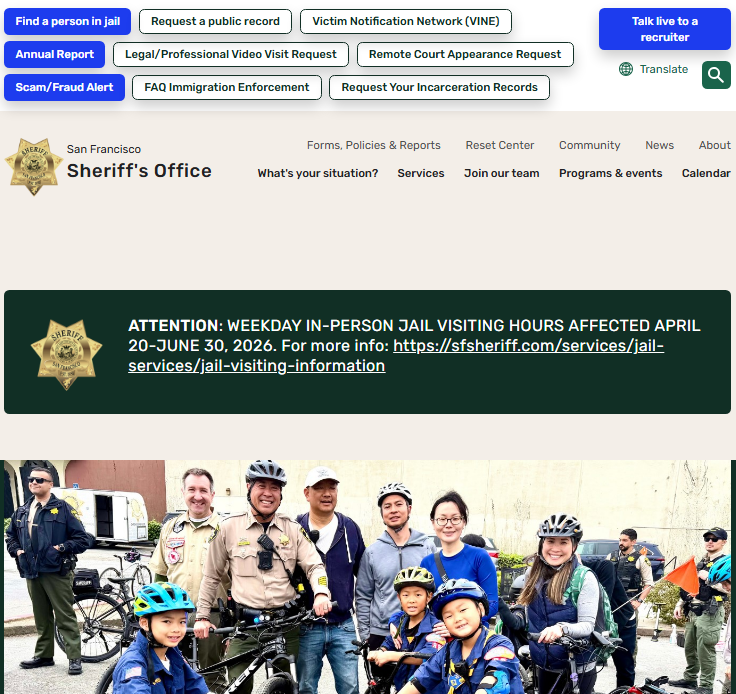
- Field 1: First Name – Enter first 3 letters (e.g., “Joh” for John)
- Field 2: Last Name – Enter full last name (e.g., “Smith”)
- Button: Click “Search”
- Output: Name, DOB, Booking #, Arrest Date, Charges, Case #, Bail, Release Date
Reviewing the San Francisco Police Department Arrest Log
The San Francisco Police Department does not offer a real-time online arrest database. However, the San Francisco Chronicle publishes a public arrest log. This log lists recent arrests with the detainee’s full name, age, address, charges, and arrest date. It is updated weekly and serves as a secondary source for recent arrest data. While not official, it aggregates data from public sources and is useful for spotting trends or confirming recent activity.
- Go to the arrest log page
- Scroll through the list or use Ctrl+F to search by name
- Note the arrest date, charges, and location
Requesting Official Arrest Reports
For certified arrest reports, individuals must contact the San Francisco Police Department Records Division. These reports include detailed narratives, officer notes, and evidence summaries. To request, submit a written application to 850 Bryant Street, Room 400, San Francisco, CA 94103. Include the subject’s full name, date of birth, and approximate arrest date. Processing takes 7–14 business days, and fees may apply. Certified copies are required for legal or employment use.
How to Perform a Warrant Search in San Francisco
Warrant searches in San Francisco are more complex than arrest lookups. Active warrants are not published online due to safety and legal concerns. The Sheriff’s Office and Police Department restrict public access to prevent tip-offs and protect ongoing investigations. However, individuals can check their own warrant status in person or through limited online tools. Third-party searches for others are heavily restricted unless authorized by law.
Checking Your Own Warrant Status In Person
The Central Records and Warrants Unit of the San Francisco Sheriff’s Office handles warrant inquiries. Located at 850 Bryant Street, Room 460, this office allows individuals to check for active warrants against their name. Visit between 8:00 AM and 5:00 PM, Monday through Friday. Bring a valid government-issued photo ID. Staff will search internal databases and provide written confirmation of any active warrants. This service is free and confidential.
- Location: 850 Bryant St, Room 460, SF, CA 94103
- Hours: Mon–Fri, 8:00 AM – 5:00 PM
- Required: Photo ID (driver’s license, passport)
- Output: Written confirmation of active or cleared warrants
Using the Most Wanted List for Public Warrants
The San Francisco Police Department publishes a Most Wanted list at https://www.sanfranciscopolice.org/stay-safe/ongoing-investigations/most-wanted. This page features individuals with felony warrants for serious crimes such as homicide, robbery, or sexual assault. Each entry includes a photo, name, charges, and last known address. This list is updated monthly and serves as a public safety tool. It does not include all active warrants, only high-priority cases.

- Visit the Most Wanted page
- Browse by category (e.g., homicide, robbery)
- Click on a name to view charges and description
Court-Based Warrant Search via Case Lookup
The Superior Court of California, County of San Francisco, maintains a case search portal. While this system does not show warrant status directly, it reveals if a case is active, dismissed, or sentenced. If a case is open and no recent activity is shown, it may indicate an outstanding warrant. Search by name or case number in the “Party Name” or “Case Number” field. Results display court dates, charges, and case status.
- Field 1: Party Name – Enter full name
- Field 2: Case Number – Optional
- Button: Click “Search”
- Output: Case status, charges, next court date
Accessing San Francisco Criminal Records and Background Checks
Criminal records in San Francisco include arrests, charges, convictions, and court dispositions. These are used for employment screening, housing applications, and legal verification. California law allows individuals to obtain their own criminal history, but third-party access is limited. The California Department of Justice (DOJ) maintains the statewide criminal record database, while local agencies provide supplemental data.
Requesting Your Own Criminal History from the CA DOJ
To get a copy of your criminal record, submit a request to the California Department of Justice. Use form BCII 8016, available at https://oag.ca.gov/fingerprints/forms. Complete the form, attach a fingerprint card from a live scan provider, and mail it to P.O. Box 903467, Sacramento, CA 94203-467. Processing takes 4–6 weeks. The report includes all arrests and convictions in California, including those in San Francisco.

- Download and complete form BCII 8016
- Get fingerprints at a live scan location
- Mail form, fingerprints, and fee ($25) to the DOJ
- Receive the report by mail in 4–6 weeks
Using Local Court Records for Case Details
The San Francisco Superior Court provides online access to criminal case records. The person’s name or case number. Results show filing date, charges, court appearances, and final judgment. This data complements state-level records and provides local context. Certified copies can be requested in person at 400 McAllister Street, Room 107.
- Field: Party Name – Enter full name
- Button: Click “Search”
- Output: Case number, charges, status, judgment
Third-Party Background Check Services
Private companies like Checkr, BeenVerified, and Intelius offer background checks using public records. These services compile data from courts, jails, and law enforcement databases. While convenient, they may contain outdated or incomplete information. Always verify results with official sources. Fees range from $20 to $50 per report. Results typically include arrest history, warrants, and criminal convictions.
San Francisco Jail and Inmate Records
Jail records in San Francisco are maintained by the Sheriff’s Office and reflect the current detention status. These records are updated in real time and include booking details, charges, and release dates. The primary tool is the Inmate Locator, which is free and accessible online. It covers all county jails, including those in San Francisco.
Searching the Inmate Locator by Name
Go to https://www.sfsheriff.com/find-person-jail. In the “First Name” field, type the first three letters of the person’s first name. In the “Last Name” field, enter their full last name. Click “Search.” The system returns the inmate’s name, date of birth, booking number, arrest date, charges, bail amount, and expected release date. If no results appear, the person is not currently in custody.
- Field 1: First Name – First 3 letters
- Field 2: Last Name – Full last name
- Button: Search
- Output: Name, DOB, Booking #, Arrest Date, Charges, Bail, Release Date
Checking Inmate Status by Booking Number
If you have the booking number, enter it directly into the “Booking Number” field on the same page. Click “Search” to retrieve the inmate’s full record. This method is faster and avoids name confusion. Booking numbers are assigned at intake and remain with the inmate until release.
- Locate the booking number from a prior report
- Enter it in the Booking Number field
- Click Search
- View full inmate details
Visiting an Inmate in San Francisco Jail
To visit an inmate, check their location using the Inmate Locator. Each jail has specific visiting hours and rules. For example, the County Jail #3 at 425 7th Street allows visits on weekends from 8:00 AM to 4:00 PM. Visitors must register online at https://www.sfsheriff.com/ and bring a valid ID. Minors must be accompanied by an adult.
San Francisco Court Records and Case Lookup
Court records in San Francisco include criminal, civil, family, and traffic cases. These are managed by the Superior Court and are accessible online or in person. Criminal case records show charges, court dates, and outcomes. They are essential for legal research, background checks, and verifying convictions.
Searching Criminal Cases Online
Use the court’s case search portal at https://www.sfsuperiorcourt.org/. Enter the person’s full name in the “Party Name” field. Leave the case number blank unless known. Click “Search.” Results display case number, filing date, charges, court department, and next hearing. Click on a case number to view detailed dockets.
- Field: Party Name – Full name
- Button: Search
- Output: Case #, Charges, Status, Next Court Date
Requesting Certified Court Documents
Certified copies of court records require an in-person visit to the Clerk’s Office at 400 McAllister Street, Room 107. Bring a photo ID and the case number. Staff will retrieve the file and provide a stamped copy. Fees are $40 per document. Processing is immediate for recent cases; older records may take 1–2 days.
- Visit 400 McAllister St, Room 107
- Provide case number and ID
- Pay a $40 fee
- Receive a certified copy
Understanding Case Status Codes
Court records use status codes to indicate case progress. Common codes include:
| Active | Case is ongoing; next hearing scheduled |
| Convicted | Defendant found guilty; sentence imposed |
| Dismissed | Charges dropped by the court or the prosecutor |
| Probation | Defendant on supervised release |
| Warrant | Bench warrant issued for failure to appear |
San Francisco Mugshots and Public Arrest Data
Mugshots are booking photos taken when a person is arrested. In San Francisco, these are not routinely published online by law enforcement. However, media outlets and third-party sites may post them. The Sheriff’s Office does not release mugshots to the public unless part of an active investigation. Arrest data, including names and charges, is public but must be requested properly.
Where Mugshots Appear
Mugshots may appear on news websites like SF Gate or local TV stations after high-profile arrests. Third-party sites such as Mugshots.com or Arrests.org compile these images. These sites are not official and may charge fees to remove photos. The Sheriff’s Office does not endorse or host these platforms.
- SF Gate: https://www.sfgate.com
- Local news stations: KRON, KPIX, KGO
- Third-party sites: Mugshots.com, Arrests.org
Requesting Arrest Data from the Sheriff’s Office
To obtain official arrest data, submit a Public Records Act request to the San Francisco Sheriff’s Office. Email publicrecords@sfsheriff.com with the subject’s name, date of birth, and approximate arrest date. Include your contact information. The office responds within 10 business days. Fees may apply for copying and labor.
- Email publicrecords@sfsheriff.com
- Include name, DOB, arrest date
- Wait for a response within 10 days
Limitations on Mugshot Publication
California law restricts the commercial use of mugshots. Sites that charge to remove photos may violate state law. Individuals can file complaints with the California Attorney General if exploited. The Sheriff’s Office does not release mugshots unless required by law or court order.
San Francisco Police Department Records
The SFPD maintains records of arrests, investigations, and officer reports. These are used for internal review, legal defense, and public transparency. Access is governed by California’s Public Records Act. Most records are available upon request, but some are exempt due to privacy or ongoing investigations.
Requesting Police Reports
To get a copy of a police report, visit the Records Division at 850 Bryant Street, Room 400. Bring a photo ID and the report number if known. If unknown, provide the date, location, and names involved. Staff will search the database. Reports cost $15 per page. Processing takes 3–5 business days.
- Location: 850 Bryant St, Room 400
- Hours: Mon–Fri, 8:00 AM – 5:00 PM
- Fee: $15 per page
- Processing: 3–5 days
Accessing the Police Blotter
The SFPD does not publish a daily blotter online. However, the San Francisco Chronicle compiles recent incidents. This includes arrests, thefts, and assaults. It is updated weekly and serves as a public summary of police activity.
- The Chronicle’s arrest log
- Search by date or location
- Review incident details
Body Camera and Surveillance Footage
Body camera footage is not publicly available unless released by the District Attorney or by court order. Requests must be submitted in writing to the SFPD Legal Unit. Include the incident date, officer name, and reason for the request. Approval depends on privacy laws and case status.
San Francisco County Records and Public Data
San Francisco County manages records for health, property, and criminal justice. These are separate from city records but often overlap. The Sheriff’s Office handles jails and warrants, while the Assessor-Recorder manages property deeds. The District Attorney’s office prosecutes crimes and maintains conviction records.
Property and Vital Records
Birth, death, marriage, and property records are available through the San Francisco County Assessor-Recorder at https://www.sfgov.org/assessor/. Search by name or address. Certified copies require a fee and ID. Property records show ownership, taxes, and liens.
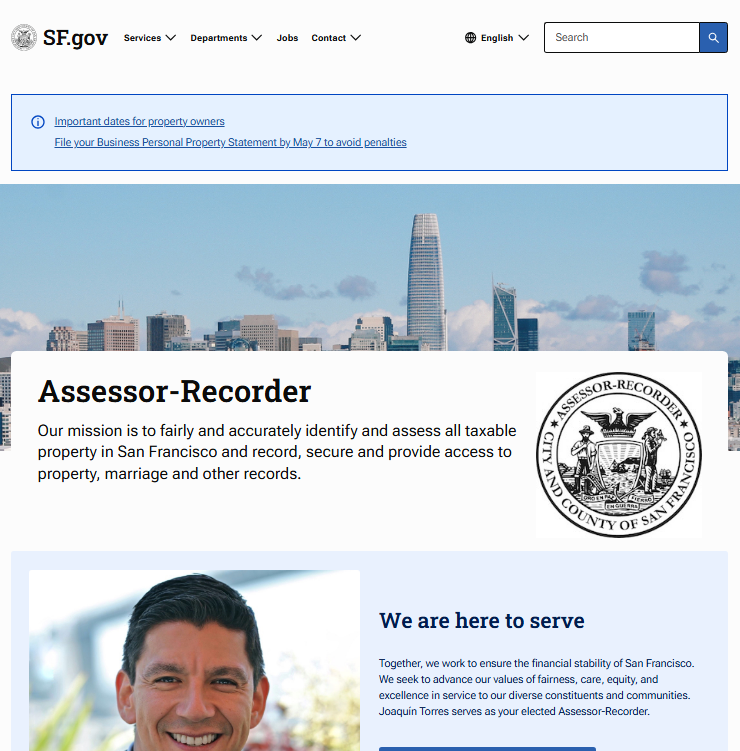
- Field: Name or Address
- Button: Search
- Output: Deed, tax history, ownership
District Attorney Case Records
The District Attorney’s office prosecutes criminal cases. To request records, email da.records@sfgov.org with the case number and defendant’s name. Include your contact information. Records include charging documents, plea agreements, and sentencing reports. Processing takes 5–10 days.
- Email da.records@sfgov.org
- Provide the case number and name
- Wait 5–10 days for a response
Health and Social Services Records
Health records are protected under HIPAA and not publicly accessible. Social services data, such as welfare or housing assistance, is confidential. Requests require written consent from the individual or a court order.
Legal and Privacy Considerations
Accessing criminal records in San Francisco must comply with state and federal laws. The California Public Records Act allows access to most government data, but exemptions exist for ongoing investigations, juvenile records, and personal privacy. Misuse of records can lead to legal penalties.
Expungement and Record Sealing
Individuals can petition to seal or expunge criminal records under California Penal Code 1203.4. This removes convictions from public view after probation. File a petition at the Superior Court where convicted. If granted, the record is marked “dismissed” but not destroyed. Employers cannot ask about expunged crimes.
- File a petition at 400 McAllister St
- Pay filing fee ($120)
- Attend the hearing if required
- Receive a court order if approved
Data Accuracy and Disputes
If a record is incorrect, contact the agency that created it. For jail records, email the Sheriff’s Office. For court records, visit the Clerk’s Office. Provide proof of error, such as a release document. Agencies must correct errors within 30 days under state law.
- Identify the error
- Gather supporting documents
- Contact the agency
- Request correction in writing
Use of Records in Employment
Employers can use criminal records for hiring decisions, but must follow the Fair Chance Act. They cannot ask about arrests without convictions or records older than 7 years. Applicants must be notified before adverse action. Discrimination based on criminal history is prohibited unless job-related.
| Agency | Address | Phone | Hours |
| San Francisco Sheriff’s Office | 850 Bryant St, SF, CA 94103 | (415) 553-0123 | Mon–Fri, 8:00 AM – 5:00 PM |
| SFPD Records Division | 850 Bryant St, Room 400, SF, CA 94103 | (415) 553-1133 | Mon–Fri, 8:00 AM – 5:00 PM |
| Superior Court Clerk | 400 McAllister St, Room 107, SF, CA 94102 | (415) 551-3800 | Mon–Fri, 8:00 AM – 4:00 PM |
FAQ About San Francisco City, CA Warrant Search and Arrest Records
Searching for warrant and arrest information in San Francisco can be confusing because different agencies manage records separately. The San Francisco Sheriff’s Office, local courts, and police departments each maintain specific records based on custody status, criminal charges, and court proceedings. Below are answers to common questions about warrants, arrest records, criminal history access, and court documents in San Francisco County.
Can I search for someone else’s warrant in San Francisco online?
No, active warrants are not published online for privacy and safety reasons. The San Francisco Sheriff’s Office and Police Department do not provide public warrant databases. Only individuals can check their own warrant status in person at 850 Bryant Street, Room 460. Third-party searches require legal authorization, such as a court order or law enforcement role. The Most Wanted list shows only high-profile felony warrants and does not include all active cases. Attempting to access restricted data without permission may violate state laws.
How long do arrest records stay in San Francisco?
Arrest records remain in law enforcement databases indefinitely unless sealed or expunged. The Sheriff’s Office keeps booking records permanently. Court records are archived for decades. However, California law limits how long employers can consider arrests without convictions—typically seven years under the Fair Credit Reporting Act. Expungement under Penal Code 1203.4 can remove convictions from public view after probation. Juvenile records are automatically sealed at age 18 unless charged as an adult.
What information is included in a San Francisco arrest record?
An arrest record includes the person’s full name, date of birth, booking number, arrest date and time, arresting agency, charges filed, bail amount, and current custody status. It may also show the arresting officer’s name, location of arrest, and case number. If the person is released, the record notes the release date and reason. These details are available through the Sheriff’s Inmate Locator or by requesting a police report from the Records Division.
Can I get a certified copy of a court record in San Francisco?
Yes, certified copies are available at the Superior Court Clerk’s Office, located at 400 McAllister Street, Room 107. Bring a photo ID and the case number. If the number is unknown, provide the party names and approximate filing date. Staff will retrieve the file and provide a stamped, certified copy. The fee is $40 per document. Processing is immediate for recent cases; older records may take 1–2 business days. Certified copies are required for legal, immigration, or employment purposes.
How do I remove my mugshot from a website in San Francisco?
Mugshots posted by news outlets or third-party sites are not controlled by law enforcement. To request removal, contact the website directly. Many charge a fee. If the site refuses, you can file a complaint with the California Attorney General under Penal Code 647(j), which prohibits profiting from mugshots. Expungement of your record strengthens your case. The Sheriff’s Office does not publish mugshots and cannot force removal from private sites.
Are San Francisco criminal records available to the public?
Yes, most criminal records are public under the California Public Records Act. This includes arrest logs, court case details, and inmate status. However, records involving minors, sealed cases, or ongoing investigations are exempt. Accessing your own record is straightforward, but third-party requests may be denied without consent. Always verify information with official sources to ensure accuracy.